✏️ Written by: Martine W
🗓️ 17th December 2025
ADHD & Autism: A Parent’s Guide to Managing Executive Function Challenges at Home and School 🏡
Have you heard of Executive functioning challenges? Well no, when Reuben was first diagnosed as being Autistic I had NO clue what it was either and my understanding of it didn’t truly deepen until I started to work as a learning support assistant at a Special needs to school.
Executive Functioning challenges are one of THE most common, and misunderstood, difficulties faced by autistic and ADHD children. Parents and carers often search for support around planning, organisation, transitions and staying on task because these skills directly affect daily routines, school readiness and family stress levels. BUT no one really talks about Executive function as a valid reason for these struggles and they need to start.
What are executive functioning difficulties?
Executive functioning refers to the brain skills that help us to:
- Plan and sequence tasks
- Start activities independently
- Organise belongings and time
- Move between tasks (transitions)
- Regulate emotions and behaviour
In ADHD and autism, these skills may develop differently. This means tasks that appear “simple” to adults can require a huge amount of mental energy for a child.
Mornings demand all of these skills at once, making them a perfect storm for stress, dysregulation and conflict before a day has even begun.
For many families, the biggest struggle shows up first thing in the morning.
Getting ready for the day, particularly washing and dressing, can feel overwhelming for neurodivergent children and young people. Which order do I do these tasks? That towel is tough rough! There’s so much to do! Which order to I put my clothes on?… this inner dialog for the autistic/ adhd brain is endless, sometimes cyclical and often manifests in challenge behaviours. Your children aren’t trying to be difficult, their executive function challenges are making these tasks difficult for them.
Something I learned repeatedly over the years and especially during a period of regression, is that if our morning was difficult, the rest of the day often followed the same path.
Why washing and dressing are especially challenging
Many of us will not think about it as a morning routine seems automatic but when broken down, the process of getting ready is quite a lengthy process and involves:
- Remembering multiple steps
- Managing sensory input (water, clothing textures, temperature)
- Transitioning from rest to action
- Understanding time pressure
- Coping with perceived demands
Without the right support, this can lead to avoidance, shutdowns or meltdowns. It’s not because a child or young person is being difficult, but because their executive functioning system is overloaded.
I learned that this is where visual planning tools can provide essential support.
How Day Visual Planner supports executive functioning
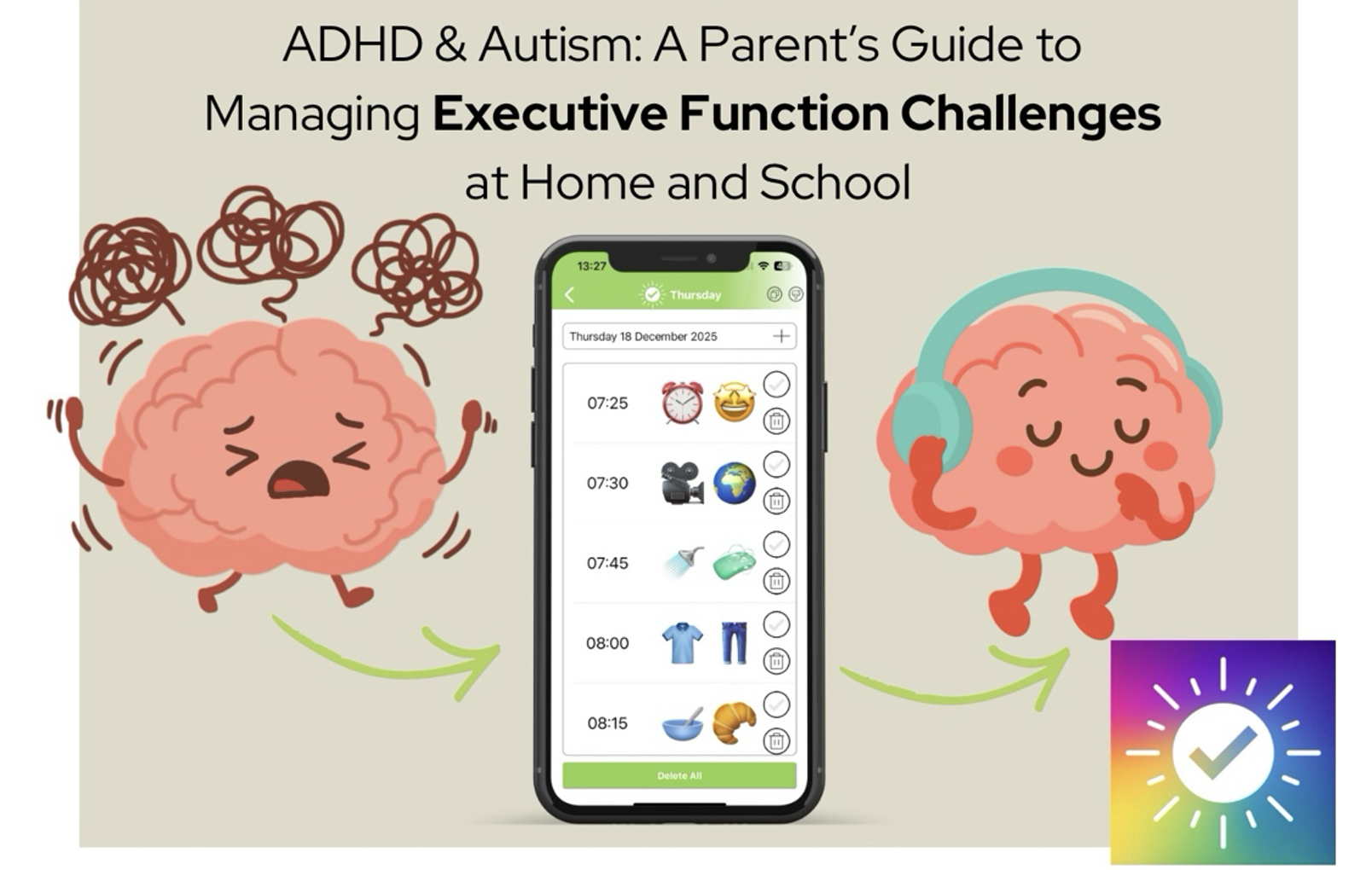
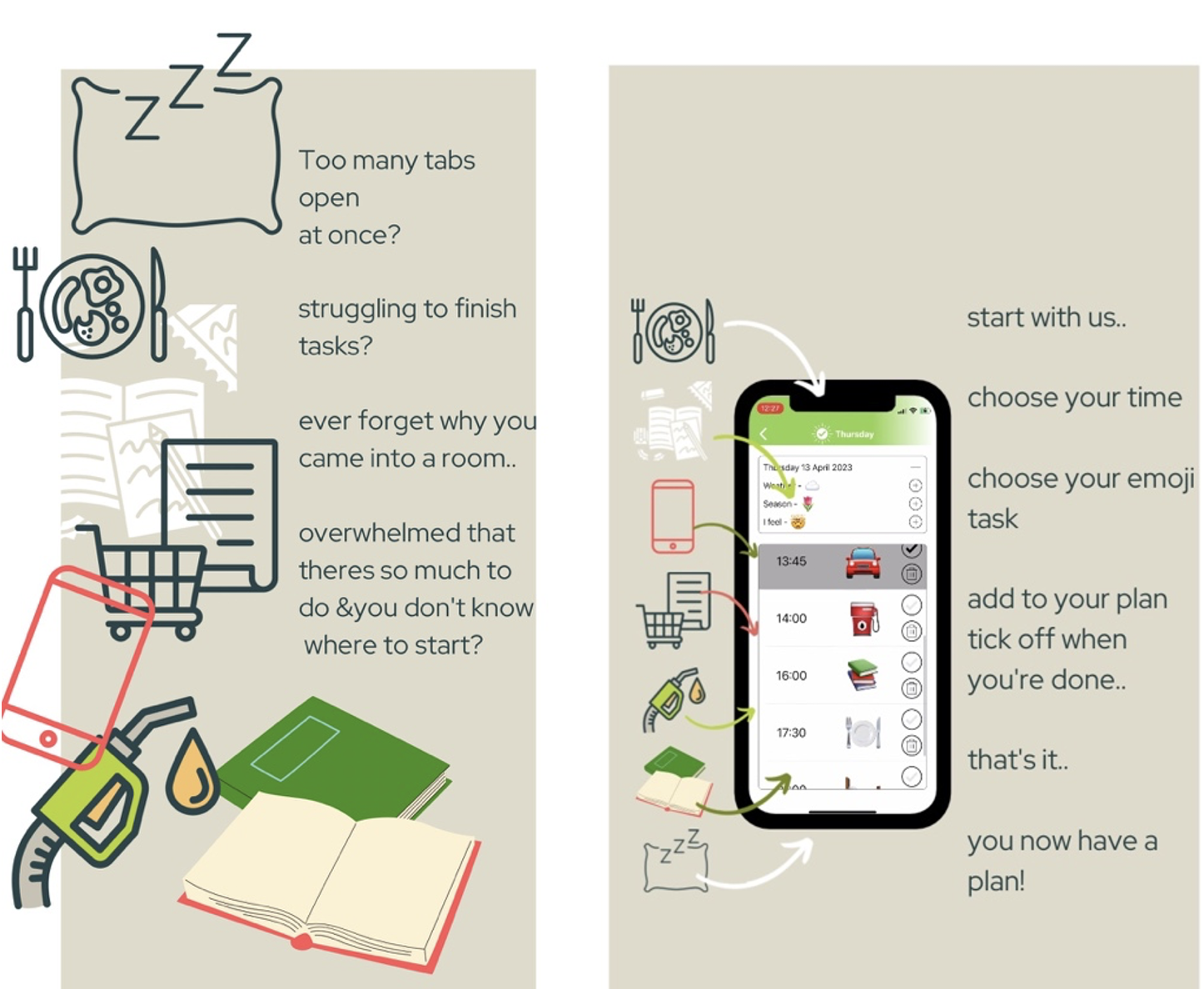
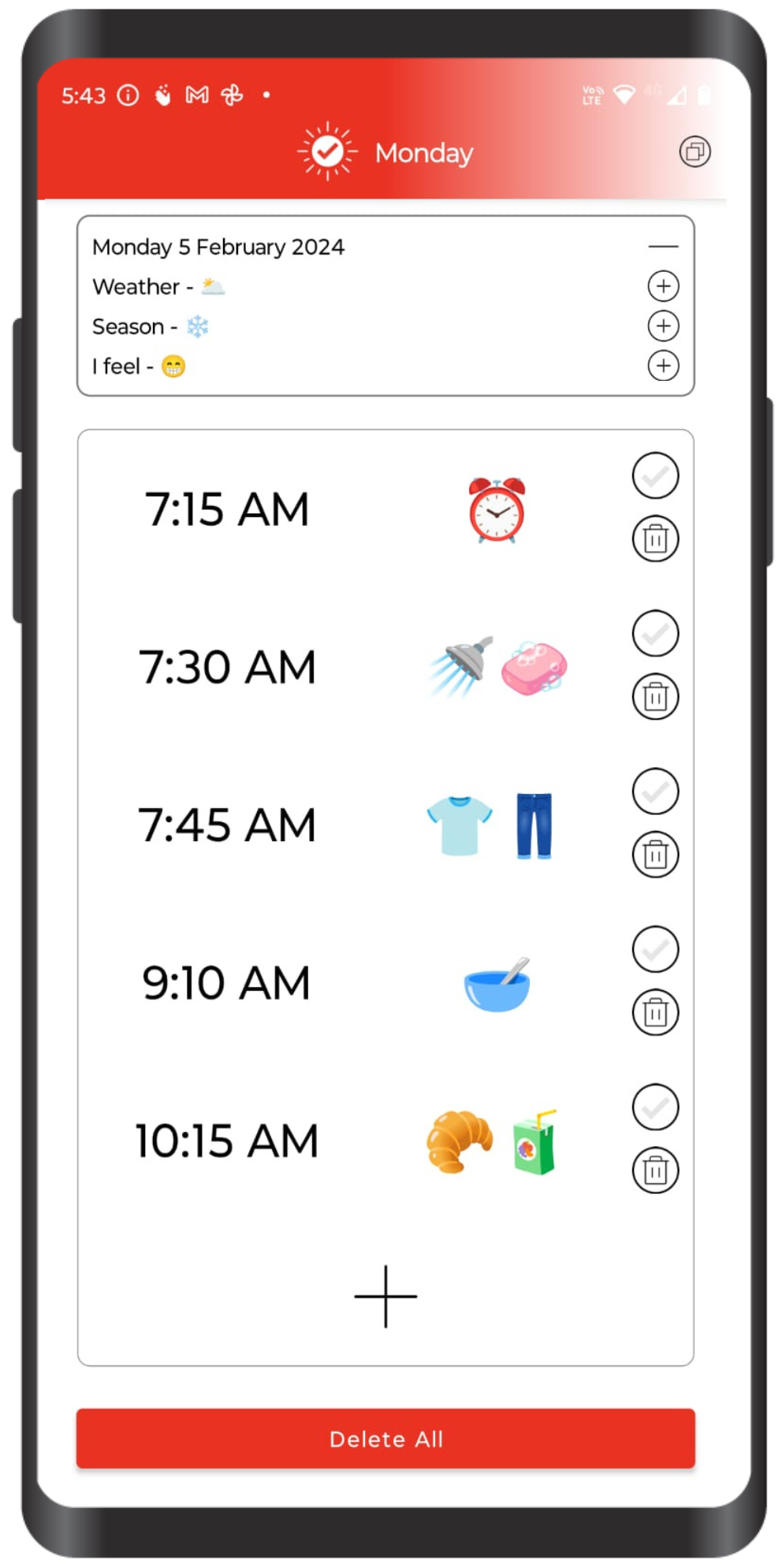
Day Visual Planner helps children and families by breaking daily routines into clear, predictable, visual steps, reducing cognitive load and anxiety. It allows you to add in as many steps as is necessary- everyone’s routine is unique and with Day you can make it as personal as you wish by adding photos of your favourite toothpaste, your uniform, favourite cereal or comfort support toy. By ticking off each task as you go, you create an instant ‘win’ a sense of satisfaction and achievement followed quickly by another, then another until you’re ready to leave with all those achievements made. It makes a different to your positivity levels.
We’ve been using it for some time, I’ve noticed a great shift in Reuben’s ability to transition from car to school. It once took 3 staff members and me to assist him from the car and into school. He now runs in and meets his friend at the door. This didn’t happen overnight, but by following a consistent morning routine, it has become an every day occurrence. Something that I once could only dream about.
Here’s 5 steps to explain why do we choose a visual plan to assist neurodiverse minds with executive functioning?
- Supporting planning with visual structure
Instead of having to hold an entire routine in their head, children can see it laid out visually:
- Wake up
- Go to bathroom
- Wash face
- Brush teeth
- Get dressed
This helps the brain understand what’s happening and what comes next.
- Helping with task initiation
Starting is often harder than continuing. With Day Visual Planner, the next step is already decided, removing the pressure to work it out independently and helping children begin without confrontation.
- Improving organisation, one step at a time
Large instructions like “get ready” can feel overwhelming. Visual planners break routines into small, manageable tasks, supporting focus and reducing avoidance.
- Making transitions more predictable
Transitions are a key executive functioning challenge in autism and ADHD. Visual schedules prepare the nervous system for change, making it easier to move between washing, dressing and leaving the house calmly.
- Supporting emotional regulation
Predictability reduces anxiety. When children know what to expect, they feel safer and more in control — which supports regulation, cooperation and confidence.
Why a supported morning routine matters
In the special school I worked with, we would prepare the children for their school day with a ‘Readiness to Learn’ morning program. We couldn’t assume that a child arriving had executive functioning support so we would initiate one as soon as they arrived.
The mindset was that a calmer morning supports:
- Better emotional regulation
- Improved school readiness
- Reduced family stress
- Stronger parent-child relationships
For example, when washing and dressing feel achievable, children start the day regulated rather than depleted.
Day Visual Planner isn’t about forcing routines or compliance. It’s about supporting executive functioning differences in a compassionate, visual way, so neurodivergent children can succeed in their own way and at their own pace.
A supported morning doesn’t just change the start of the day.
It changes everything that follows.
I hope this helps support the start of your day! Feel free to share with someone who needs to read this too.
Martine & The Day Visual Planner Team