✏️ Written by: Martine W
🗓️ 17th December 2025
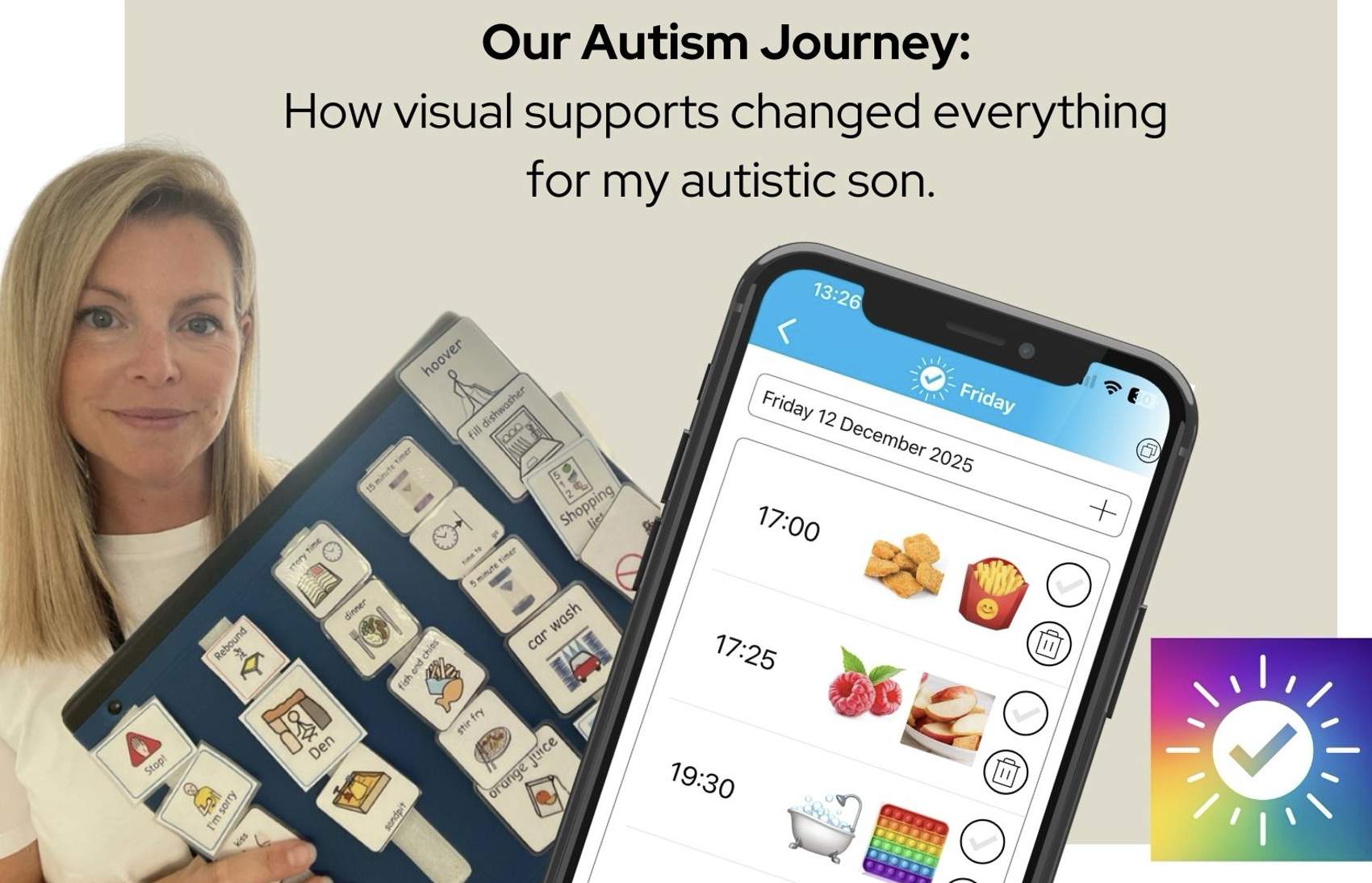
Our Autism Journey: How visual supports changed everything for my autistic son 🧳
When Reuben was three years old, visual planning quietly walked into our lives and changed everything. It sounds dramatic, but it is true.
At the time, I didn’t know it would become the foundation of how my son would understand the world, communicate his needs and feel safer within it. I just knew that I was searching – desperately – for a way to reach him.
By the age of 18months, Reuben’s speech regressed until he lost it completely. His eye contact reduced until he didn’t want to look at me at all. His interactions with his twin brother, Zach lessened and he didn’t seem interested in the things that he had previously loved. It terrified me to my core as a mother. I knew I needed to help him, to reach him somehow and I needed to do it fast.
After numerous doctors’ appointments, consultant appointments and speech and language sessions it became clear to all of us that Reuben was indeed Autistic, with numerous developmental delays and regressions. He was also, non-verbal at this time.
We received the official diagnosis just before his third birthday. He is 15 now and to this day, the diagnosis appointment is still a blur. I knew in my heart but hearing the words out loud from our consultant made it undeniable. I heard all the things he was unlikely to do. All the no’s, all the negatives. It all sounded so bleak and I felt scared. I can barely remember returning home.
Before this, autism had only lightly touched my life. As a teenager, I had worked in a child-minding provision with two autistic children. I’d been at school with a lovely little girl who shared my name. Looking back, I can see she was clearly autistic but undiagnosed at the time. That was the extent of my understanding. So, when I found myself parenting my own autistic toddler, I felt completely unprepared.
I didn’t know where to start so at first, we did nothing. We just absorbed the news.
I didn’t know which parts of autism to learn about first, or how vast and complex it really was. I didn’t yet understand what it would mean for Reuben, for his twin, for our family, or for me as his mum. Everything felt enormous and uncertain.
What I did know was that my child was struggling to communicate, and I was struggling to understand how to help him.
After the diagnosis news settled, I booked as many appointments as I could, starting with speech and language. To me, that was the most obvious thing to help with at the time. We were visited by the wonderful Karen and after several get to know you sessions, she taught us how to exchange pictures for a motivational item that we could use multiple times. For Reuben, this was fruit. He loved grapes.
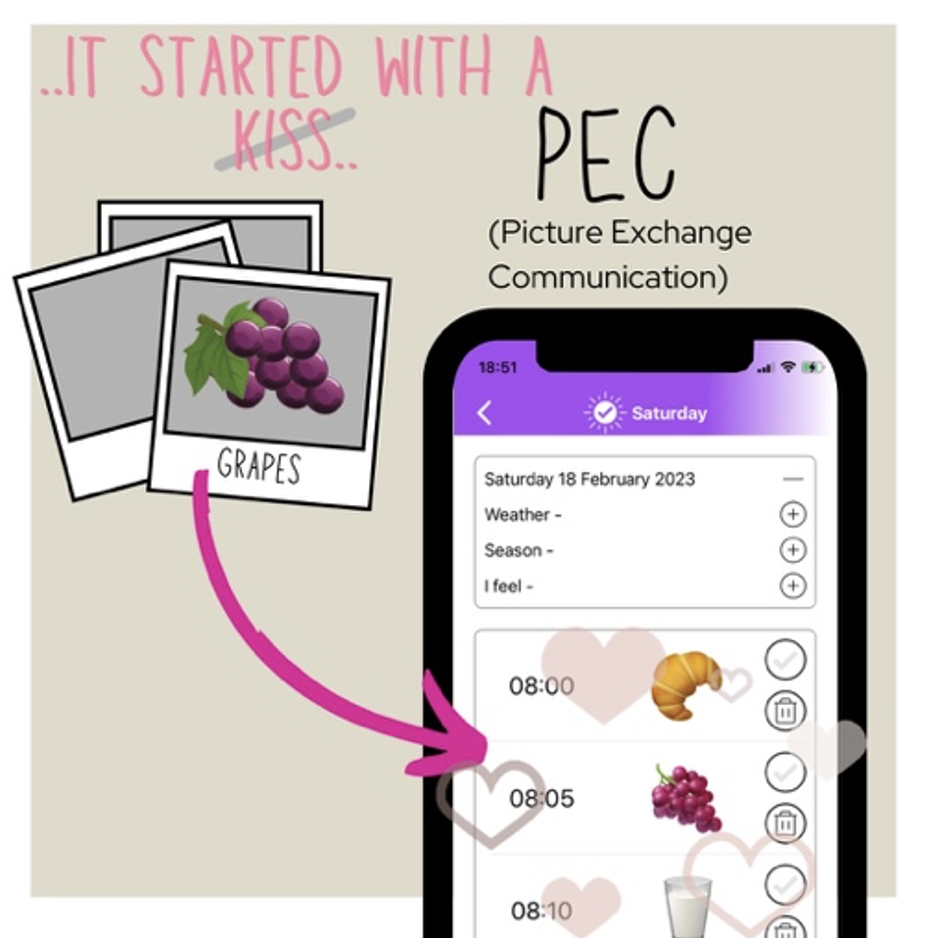
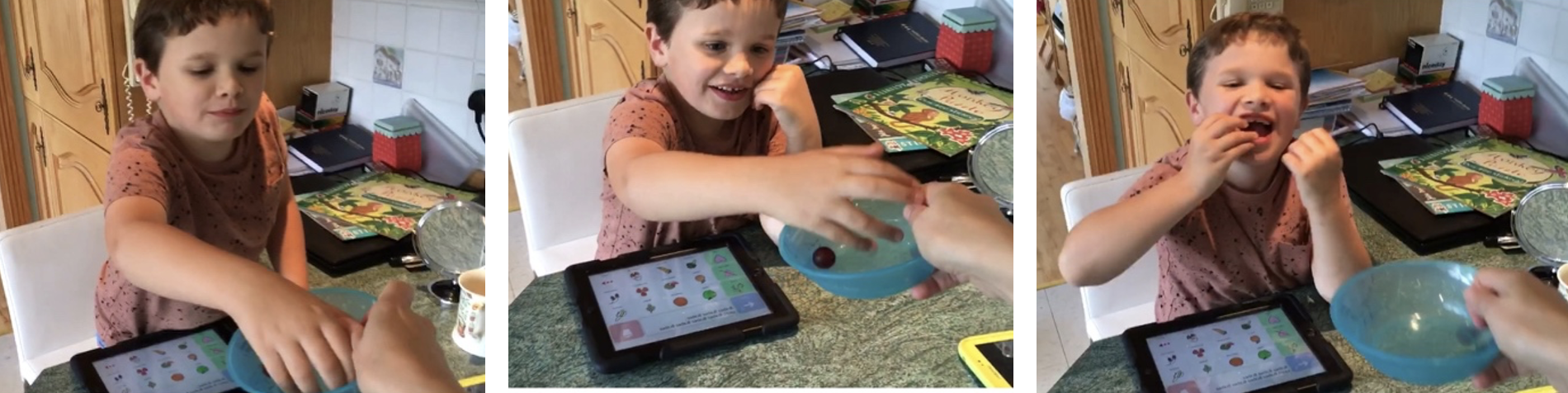
Our first breakthrough was unexpected and beautifully simple. I showed him a picture of grapes in a bowl. Sat across from us was Karen with a physical bowl of grapes.
Reuben wanted the grapes sitting in a bowl on the table. Instead of reaching, climbing across the table or becoming overwhelmed, he was encouraged to hand over a picture of grapes. I modelled the movement with the picture and for the first time in a long time, he was engaged, not giving eye contact, but he watched what I did and it gave me hope.
Reub gave it a go, he giggled and I held my breath as he awkwardly moved the picture to Karen. In return, he received the real thing. Half a grape. That tiny exchange – picture for object – was the beginning of our communication journey. It was the moment I realised that visuals weren’t just helpful, they were powerful.
Visual supports became our bridge. Pictures gave Reuben a way to express his needs without pressure. They removed the urgency of speech, the overwhelm of expectations, and the frustration of not being understood.
The process has been slow, it has spanned years and there have been setbacks along the way. Some of them major. But now, at the age of 15, Visual tools have given Reuben a way to communicate and manage and control elements of his own life. With control came confidence and slowly, a marked reduction in his anxiety followed.
Through the years visuals became more than communication tools. They became a way of life for all of us. Visual schedules helped Reuben understand what was happening now and what was coming next. They reduced his anxiety, supported his transitions, and brought predictability into a world that often felt confusing and extremely loud. For the first time, I could see his nervous system settle as he realised he was being understood.
For me, visual planning brought clarity too. It gave me something practical to hold onto in a time that felt emotionally heavy. Instead of feeling lost, I had a way to support my son that honoured how his brain worked. It shifted my mindset from “How do I fix this?” to “How do I support him?”. Having that new mindset focussed me on helping Reub achieve. He didn’t need a fixer, he needed an advocate, a supporter and a way to navigate his life using the tools that supported his exact needs.
That small exchange of a grape picture was never really about grapes. It was about connection. About learning that communication doesn’t have to look one way to be valid. About meeting my child where he was, rather than pushing him towards where the world expected him to be.
Looking back now, I can see that this was the start of a much bigger journey- one of advocacy, understanding and a deep respect for neurodivergent ways of thinking. Visual planning didn’t just help Reuben find his voice. It helped me find my confidence to be the mum he needed.
To think it all began with a picture, a bowl of grapes and a moment that showed me that small steps can lead to life-changing understanding.
Small steps lead to bigger things, regardless of how long it takes to get there.
We’re right there with you on this journey- keep going!
Martine & The Day Visual Planner Team